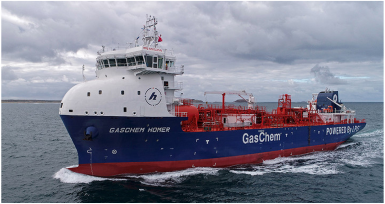
The gas tanker had just left its berth at the Port of Brisbane when it lost propulsion for two minutes as two of its three electrical generators were not properly configured causing the Gaschem Homer blackout, according to an Australian Transport Safety Bureau (ATSB) final report.
What happened
At 1100 local time on 15 March 2025, Gaschem Homer was departing for sea from its berth in the port of Brisbane, Queensland, under the conduct of a harbour pilot. At 1104, while the ship was being turned towards the port’s entrance, it experienced an electrical blackout, resulting in the total loss of propulsion and steering control. About two minutes later, the crew restored the electrical power. The incident did not result in damage or injury.
What the ATSB found?
The ATSB found that, during departure preparations, the crew had forgotten to switch two of the ship’s three generators to automatic mode. As a result, the ship’s power management system was unable to automatically distribute electrical load across all generators, restricting generating capacity to only one generator. The increased power demand when the bow thruster was operated during departure manoeuvring could not be supported by the single generator and it tripped on overload, causing the blackout.
The investigation also identified a safety issue relating to the shipboard safety management system, which had not identified operational risks associated with Gaschem Homer’s electrical installations and implemented effective controls. Procedures were generic and non-informative and there were no other controls in place to prevent such operational lapses resulting in a power failure.
What has been done as a result?
The ship manager, Hartmann Gas Carriers, risk-assessed potential failure modes associated with its ships’ power management systems and established additional controls to prevent total power failures. The shipboard safety management system(s) has been amended to include guidelines for blackout prevention and procedures requiring generators to be set for automatic load sharing before manoeuvring.
Pre-departure and arrival checklists for the engine room and bridge were amended to include verification of generator mode status. To supplement these updates, a power demand matrix has been developed to specify the minimum number of generators required to be online for each operational mode.
In addition, the company has introduced targeted training for watchkeeping engineers on critical power management and monitoring tasks, along with enhanced bridge and engine room information exchange protocols, as further controls against power failures.
The ATSB considers that the safety action adequately addresses the safety issue.
Safety message
This incident highlights the importance of ensuring all risks associated with shipboard operations and critical equipment are identified, assessed and effectively controlled. The safety management system should encompass up-to-date and useable ship-specific procedures, as well as any additional technical controls if procedural barriers alone are insufficient to mitigate risk.
Download the full report: ATSB Gaschem Homer Blackout Report